
Types of Commercial Flooring: A Complete UAE Guide
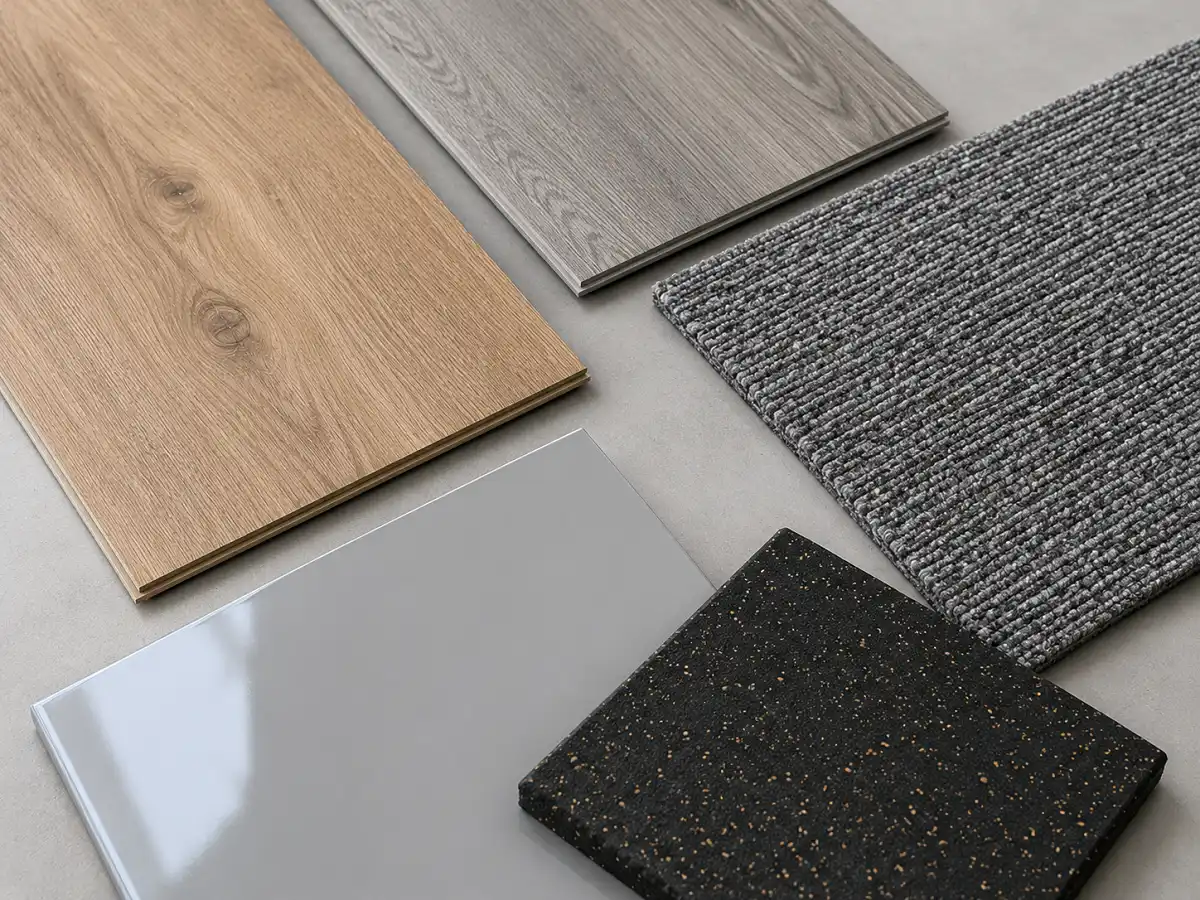
Commercial flooring covers several material types grouped into families: resilient (vinyl, LVT, SPC, rubber), soft (carpet), resinous and hard (epoxy, polished concrete), and specialist systems (raised access, anti-static). The right type depends on the space's dominant demand: foot traffic, moisture, hygiene, acoustics, static control or load. This guide explains each commercial flooring type, its uses, and how to choose.
It is written for anyone specifying a floor for a UAE business, from a single office to a multi-site fit-out. If you would rather settle it on site, a free site survey matches the type to your space and traffic.
Or call +971 50 362 7192
What Makes Flooring Commercial-Grade?
Commercial-grade flooring is built to higher wear, slip and fire standards than residential flooring, because it carries heavier traffic and must meet regulatory compliance. Where a home floor is chosen mostly on looks, a commercial floor is specified on measurable performance: how long it lasts under footfall, how safe it is when wet, how it behaves in a fire, and how much load it can take. Those four axes decide the material.
Wear Class
Wear class grades how much traffic a resilient floor can take. Commercial spaces start at Class 31 and rise with use intensity. The heavier the zone, the higher the class and the thicker the wear layer needed, with 0.7mm and above expected for heavy commercial traffic.
Slip Resistance
Slip resistance is rated R9 to R13 on the German DIN 51130 ramp test, and in Dubai the correct wet-area rating is a legal duty of care, not a preference. R9 suits dry areas only; wet and busy zones need R10 and above.
Fire & Compliance
Commercial floors are classified for fire under EN 13501-1, with ratings such as Bfl-s1 and Cfl-s1 describing reaction to fire and smoke. In the UAE, flooring must meet Dubai Civil Defence requirements, typically evidenced through Emirates Safety Laboratory testing, and sector regulators add their own standards.
| Class | Use level | Typical commercial space |
|---|---|---|
| 31 | Light commercial | Small offices, boutiques |
| 32 | General commercial | Retail, cafes |
| 33 | Heavy commercial | Open-plan offices, restaurants, corridors |
| 34 | Very heavy commercial | Airports, high-traffic public spaces |
| 41-43 | Light to heavy industrial | Workshops, light manufacturing |
Wear class under EN ISO 10874.
| R-rating | Environment |
|---|---|
| R9-R10 | Dry retail, office walkways |
| R10-R11 | Kitchens, washrooms, moderate wet |
| R11-R12 | Wet rooms, changing areas |
| R12-R13 | Heavy grease or wet industrial |
Slip resistance under DIN 51130.
The Main Types of Commercial Flooring
The main commercial flooring types fall into four families: resilient, soft, resinous and hard, and specialist systems. Each is summarised below with its commercial strengths and best-fit spaces, and links through to a dedicated page for depth.
Vinyl & LVT
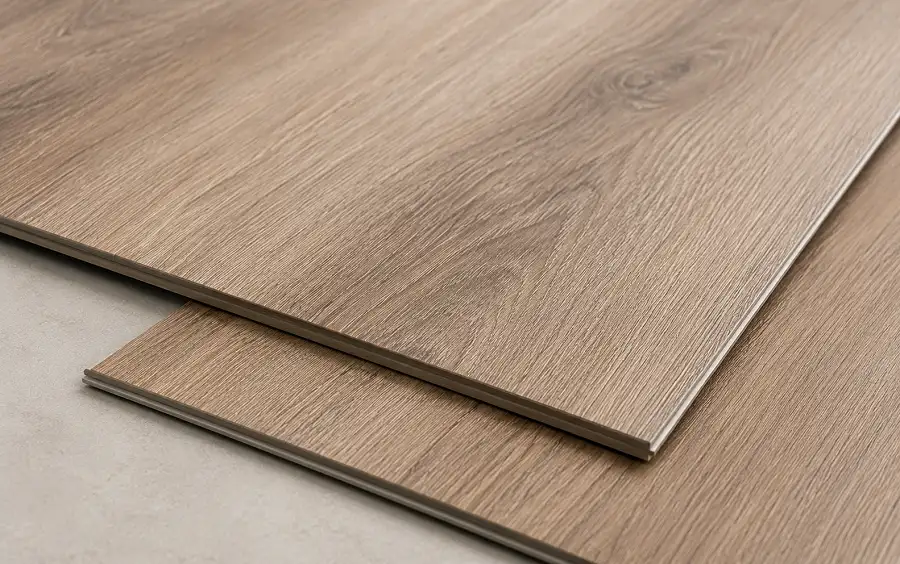
Luxury vinyl tile and plank give the look of wood or stone with strong wear resistance, easy repair and good moisture tolerance, which suits offices, retail and hospitality. Vinyl composition tile (VCT) is cheaper but needs regular polishing. Vinyl is the most versatile commercial resilient option.
Vinyl & LVT page coming soon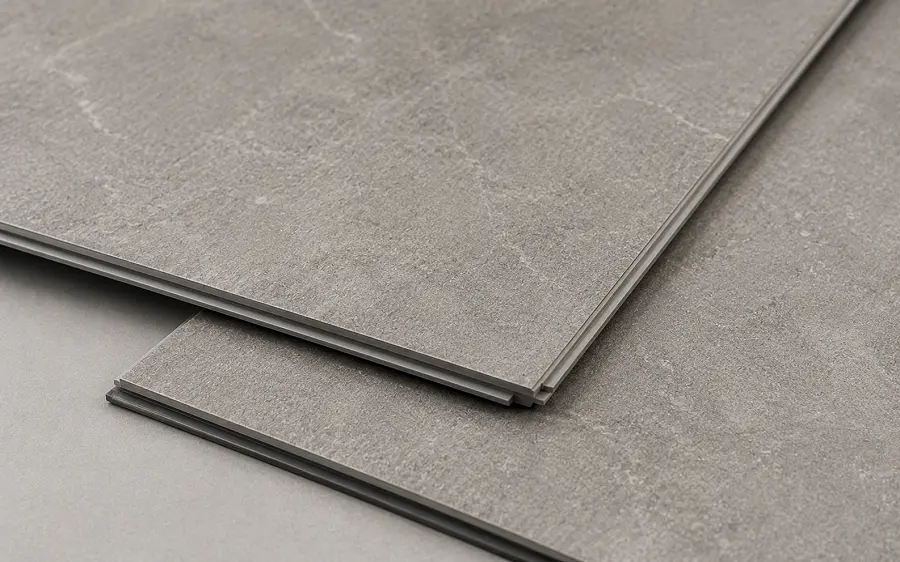
SPC & WPC
Stone plastic composite has a rigid, waterproof core that resists dents and temperature movement, making it strong in high-traffic and wet commercial zones. WPC trades some hardness for underfoot comfort. Both click together for fast installation over sound subfloors.
SPC page coming soon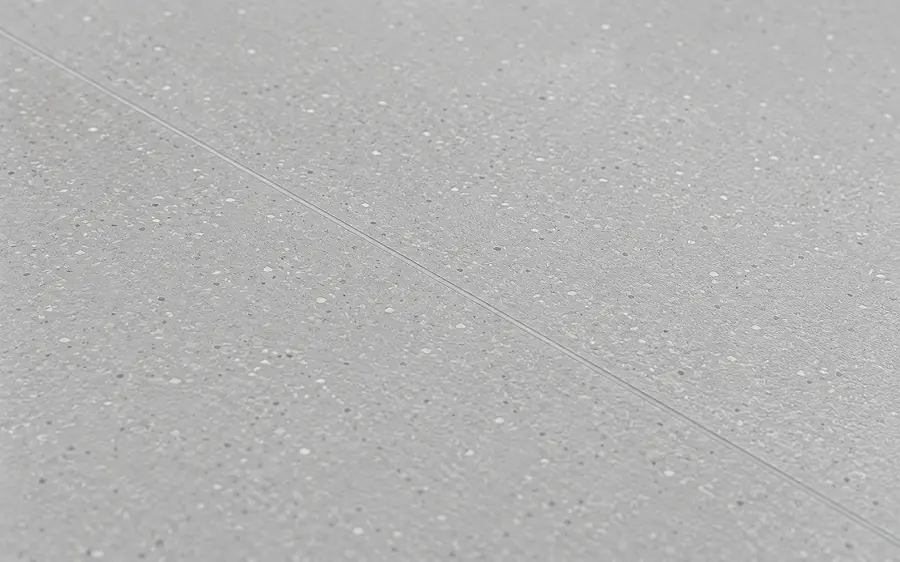
Sheet & Safety Vinyl
Sheet vinyl comes in wide rolls with few seams, and when heat-welded it forms a hygienic, near-seamless surface for healthcare and food preparation. Safety vinyl adds aggregate for slip resistance in wet zones. Damage means replacing a section rather than a single tile.
Sheet vinyl page coming soon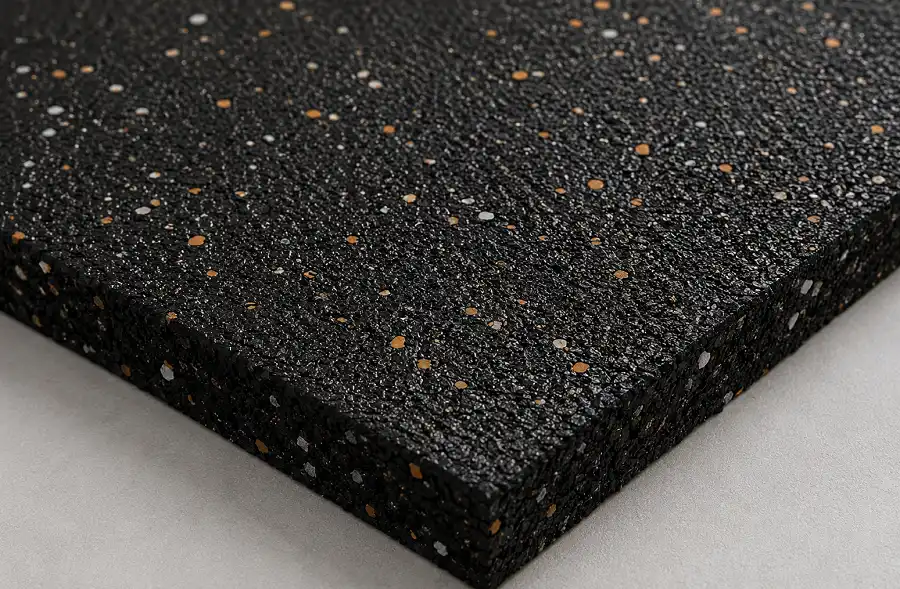
Rubber Flooring
Rubber is shock-absorbing, slip-resistant and acoustically strong, which is why it leads in gyms and suits healthcare corridors. Vulcanised and EPDM grades handle heavy impact and UAE heat without off-gassing. It is the surface we cover in full on our fitness and sports page.
Fitness & Sports Flooring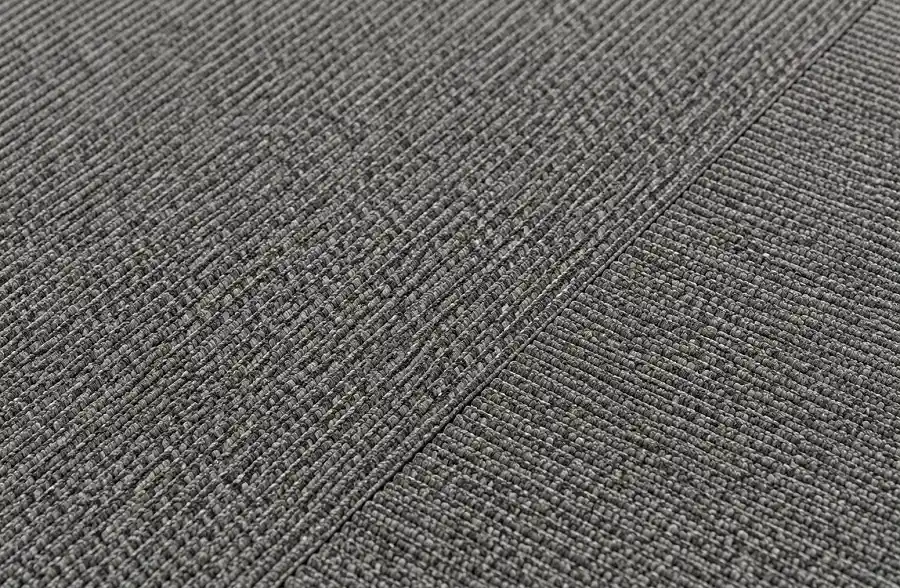
Carpet Tiles & Broadloom
Modular carpet tiles deliver acoustic comfort, easy replacement and static control for offices and corporate floors, while broadloom suits hotels and quieter zones. Commercial grades use higher face weight and density than residential carpet and carry a fire rating.
Carpet page coming soon
Epoxy & Resin Systems
Epoxy and polyurethane resin cure into a seamless, chemical-resistant, high-load surface, which is why they dominate industrial floors, warehouses and laboratories. They need proper concrete preparation and curing time but then resist impact and spills for years.
Epoxy & resin page coming soon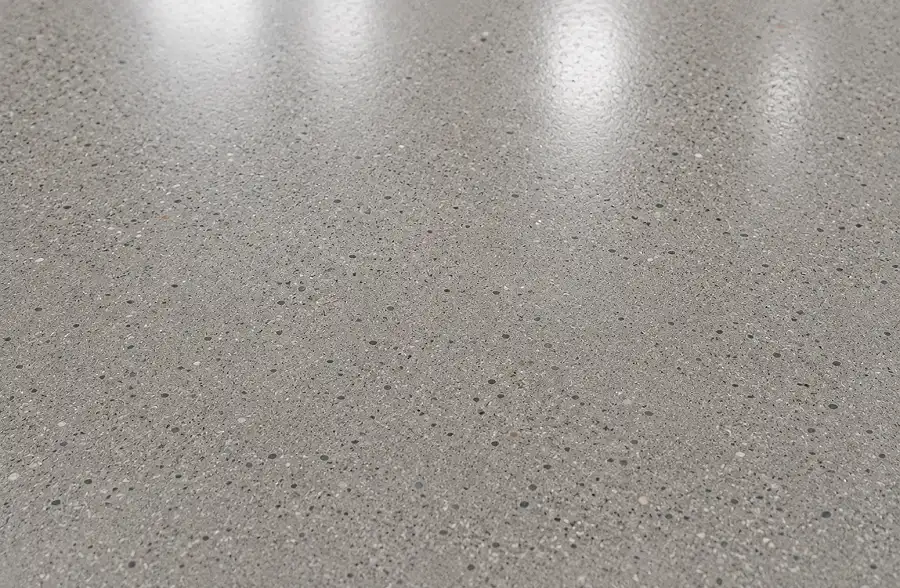
Polished Concrete
Polishing and sealing an existing slab produces a hard, low-maintenance, light-reflective floor suited to showrooms, retail and warehouses. It is very durable and cost-efficient over large areas, though it can be slippery when wet without a textured finish.
Industrial & warehouse page coming soon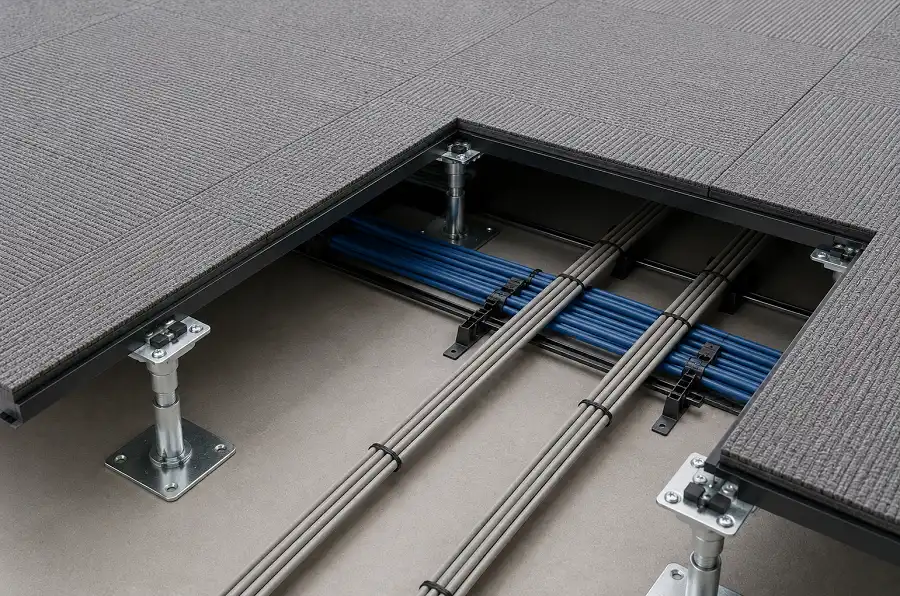
Raised Access Flooring
Raised access systems sit on adjustable pedestals to create a void for cabling and services, which is why they suit offices, data rooms and trading floors. The finished surface is usually carpet tile or vinyl.
Office page coming soon
Anti-Static & ESD Flooring
Anti-static vinyl and conductive epoxy dissipate static charge to protect sensitive electronics, which is essential in data centres, labs and electronics manufacturing. Specification is matched to a target resistance range.
Industrial & warehouse page coming soonCommercial Flooring Types Compared
The table below compares the main commercial flooring types across the factors that decide most projects. For what each option costs in the UAE market, see the cost guide.
| Type | Durability | Moisture | Acoustics | Best for |
|---|---|---|---|---|
| LVT / Vinyl | High | High | Medium | Offices, retail, hospitality |
| SPC | Very high | Waterproof | Low-Med | High-traffic, wet zones |
| Carpet tiles | Medium | Low | High | Offices, corporate |
| Rubber | Very high | High | High | Gyms, healthcare |
| Epoxy | Very high | Waterproof | Low | Industrial, warehouse |
| Polished concrete | Very high | Medium | Low | Showrooms, retail |
How to Choose Commercial Flooring
Choose commercial flooring by identifying the space's dominant demand first, then matching the material to it. Most environments are defined by one leading need: surviving footfall, staying waterproof, controlling hygiene, reducing noise, carrying load or dissipating static. Once that lead is clear, the shortlist of suitable systems is short. Where zones differ within one space, each zone is specified on its own.
| If your priority is... | Choose |
|---|---|
| Surviving heavy footfall | LVT, SPC, polished concrete |
| Waterproofing / wet zones | SPC, safety vinyl |
| Hygiene / infection control | Heat-welded sheet vinyl, resin |
| Noise reduction | Carpet tiles, rubber |
| Heavy load / chemicals | Epoxy, PU concrete |
| Static control | Anti-static vinyl, ESD epoxy |
Best Commercial Flooring by Sector
Different sectors lead with different demands. Here is the quickest route to the right starting point for each.
Commercial vs Residential Flooring: What's the Difference?
Commercial flooring is built to higher wear, slip and fire standards than residential flooring, because it carries far heavier traffic and must meet regulatory compliance. A residential floor is chosen mostly on appearance and comfort; a commercial floor is specified on wear class, certified slip rating, fire classification and load tolerance, then installed to survive years of business use.
The practical difference shows in the build. Commercial carpet uses higher face weight and density, commercial vinyl carries a thicker wear layer, and commercial resin is laid to take impact and chemicals.
The upfront cost is higher, but so is the lifespan, which is what makes commercial-grade the cheaper choice over the life of a business floor.
Choosing Commercial Flooring in the UAE
UAE conditions add three factors on top of the standard specification. Heat and humidity demand dimensional stability and proper moisture barriers, since a floor that moves or traps damp fails early in this climate. Compliance is stricter than many markets expect, with Dubai Civil Defence fire requirements and sector regulators in healthcare and education to satisfy. And subfloor preparation matters more, because rushed prep is the most common cause of early failure in Dubai and Abu Dhabi fit-outs.
Specifying against all three at the survey stage is what separates a floor that lasts from one that needs replacing inside a couple of years. For what each option costs in the UAE market, see our commercial flooring cost guide.
Frequently Asked Questions About Commercial Flooring Types
What is the most durable commercial flooring?
Epoxy resin and polished concrete are among the most durable commercial floors, handling heavy load, impact and chemicals for decades in industrial settings. For high-traffic interiors that also need comfort and design, SPC and commercial-grade LVT are the most durable resilient options. The right choice depends on whether load or footfall leads.
What is the best commercial flooring for high-traffic areas?
For high-traffic commercial areas, LVT, SPC and polished concrete perform best, combining strong wear resistance with easy maintenance. Look for a wear class of 33 or higher and a wear layer of 0.7mm and above. In wet high-traffic zones, SPC or safety vinyl adds the waterproofing and slip resistance those areas need.
What does commercial flooring wear class mean?
Wear class is a durability grade under EN ISO 10874 that shows how much traffic a resilient floor can take. Commercial classes run from 31 for light use up to 34 for very heavy public traffic, with 41 to 43 covering industrial. A higher class means a thicker wear layer and a longer life under footfall.
What slip rating do commercial floors need?
Commercial floors are rated R9 to R13 on the DIN 51130 ramp test. Dry offices and retail walkways suit R9 to R10, kitchens and washrooms need R10 to R11, and wet rooms or greasy industrial areas need R11 to R13. In Dubai, specifying the correct wet-area rating is a legal duty of care.
How much does commercial flooring cost in the UAE?
Commercial flooring cost depends on the material, area size, subfloor condition and sector compliance, so different types sit at very different price points per square metre (sqm). Carpet tiles and entry vinyl are the most economical, while resin and high-grade systems cost more. See our commercial flooring cost guide for full UAE ranges.
What is the difference between commercial and residential flooring?
Commercial flooring is built to higher wear, slip and fire standards than residential flooring because it carries heavier traffic and must meet regulatory compliance. It uses thicker wear layers, denser carpet and tougher resin, costs more upfront, and lasts far longer under business use. Residential flooring is chosen mainly for appearance and comfort.
How long does commercial flooring last?
Most commercial flooring lasts 10 to 30 years depending on the material and traffic. Epoxy and polished concrete can exceed 20 years in industrial use, commercial LVT and SPC typically last 15 to 20, and carpet tiles around 10 in heavy areas. Correct specification and installation are the biggest factors in lifespan.
Get Help Choosing the Right Commercial Floor
The fastest way to settle a specification is on site. Operating since 2013 with 1,500+ commercial projects delivered, we run a free site survey, assess traffic, subfloor and compliance, then specify the right type for each zone. For budgets, see the commercial flooring cost guide; for your sector, start with the relevant page above.
Or call +971 50 362 7192