
Industrial and Warehouse Flooring in Dubai and the UAE
Heavy-duty industrial and warehouse flooring supplied and installed across UAE logistics, manufacturing, cold storage, data centre and laboratory facilities. Epoxy, polyurethane, anti-static and polished concrete systems specified to forklift loads, chemical exposure and the heat conditions UAE industrial sites work in. Free site survey across Dubai, Abu Dhabi and all 7 emirates. Operating since 2013 with 1,500+ commercial projects delivered.
Or call +971 50 362 7192
What Is Industrial and Warehouse Flooring?
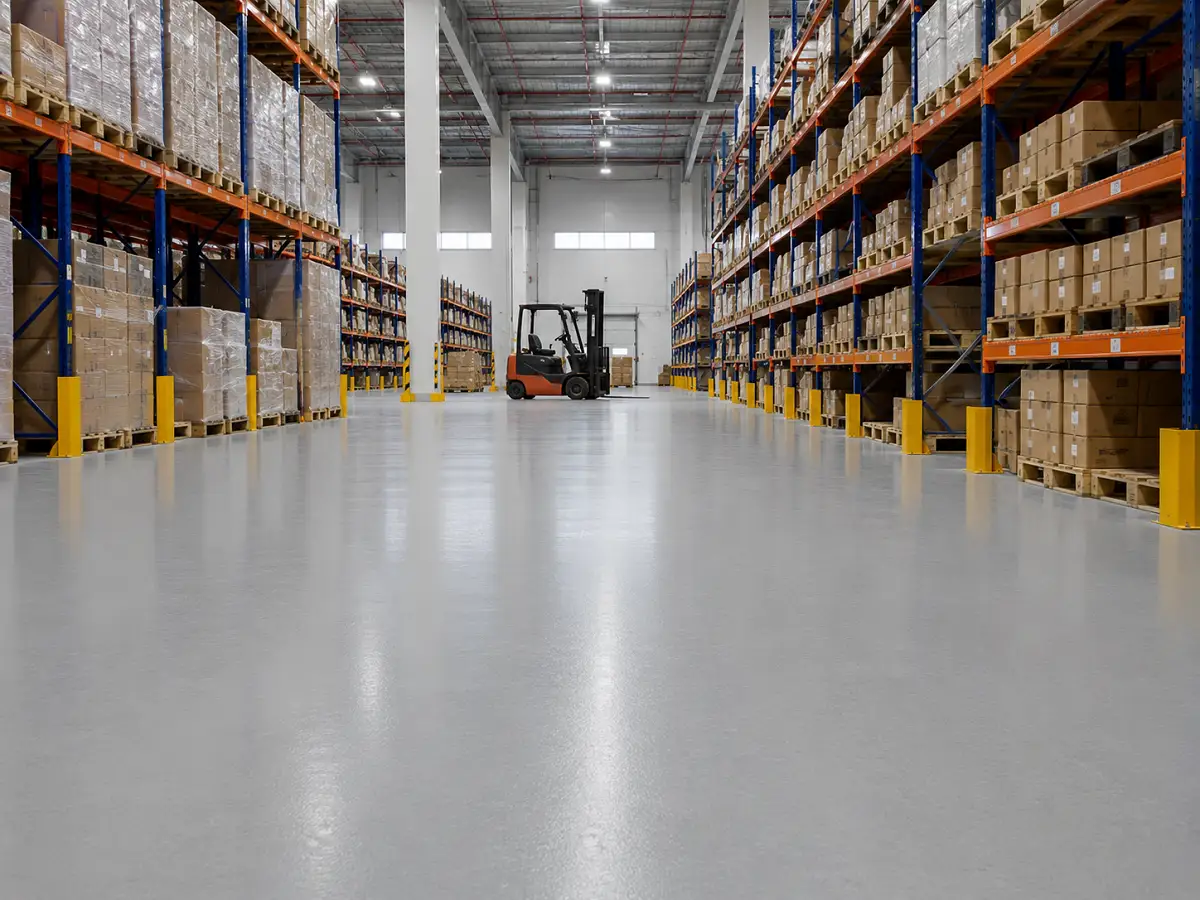
Industrial and warehouse flooring is heavy-duty flooring engineered to take forklift loads, chemical exposure, thermal shock and continuous abrasion that commercial flooring cannot. The main systems are epoxy resin, polyurethane and PU concrete, polished or treated concrete, and anti-static (ESD) variants for electronics and data centres. The right system is specified to the loads, chemicals and conditions the floor must survive.
What separates industrial flooring from general commercial is the way load and exposure concentrate. A forklift wheel puts thousands of kilos onto a small contact patch, pallet drag wears the surface continuously, and process fluids attack the substrate from above. A floor that handles cardio traffic in an office will crack and lift within months under that punishment, which is why specification starts with load and chemistry rather than appearance.
UAE conditions add a second layer. Summer slab temperatures, air-conditioned interiors and humid coastal air force the floor through expansion and contraction every day. Inland warehouses, coastal logistics yards near Jebel Ali and Khalifa Port, and air-conditioned cold stores all see different combinations of those stresses. The system selected has to survive the specific combination on your site, not the average.
Industrial Flooring Systems We Supply
We supply and install the full range of industrial flooring systems, specified to your operation's load, chemical exposure and environment. Material specification is matched to the survey, not to a default. Each system below is described by what it does and where it belongs.
Epoxy Resin Flooring
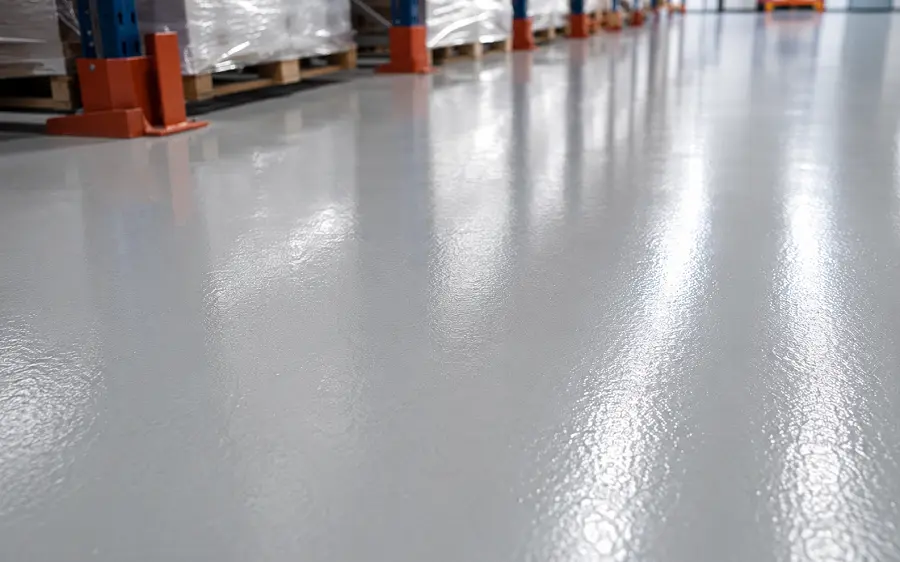
Self-levelling and trowelled epoxy resin systems for warehouses, logistics floors, manufacturing and laboratories. Seamless, chemical-resistant and abrasion-tolerant. System thickness runs from around 2mm coatings up to 6 to 9mm heavy-duty screeds, specified to forklift load and impact exposure.
View epoxy system depth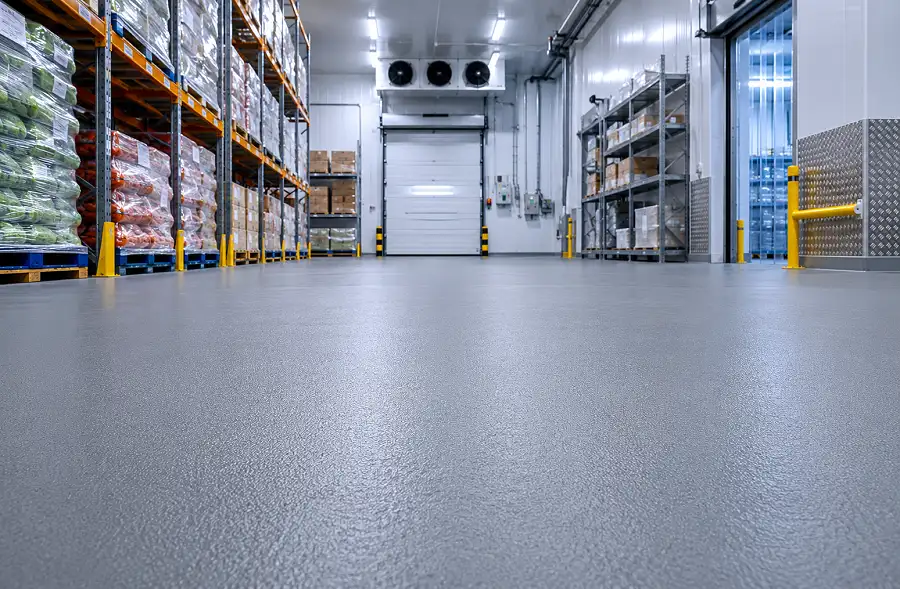
Polyurethane & PU Concrete
Polyurethane resin and PU concrete systems handle thermal shock and chemical conditions standard epoxy cannot, which is why they lead in cold storage, F&B production and chemical processing. Heat-tolerant through cycles up to around 120°C with food-safe variants available. Higher cost than standard epoxy, justified by the environment.
View PU system depth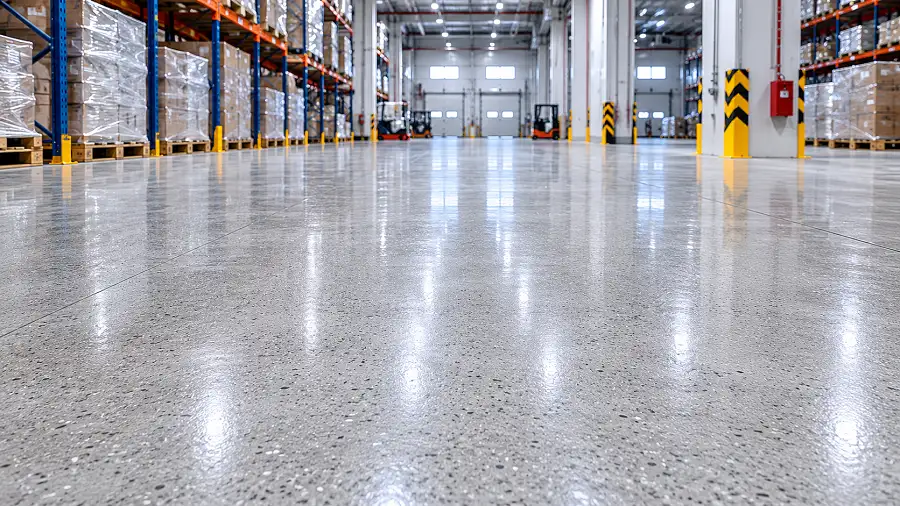
Polished Concrete & Treated Slabs
Mechanically polished and sealed concrete slabs for showrooms, retail back-of-house and dry warehouses. Hard, dust-controlled and light-reflective, with the lowest lifecycle cost over large floor areas. Suited to spaces where chemical exposure is light and abrasion from foot and wheel traffic is the main demand. Texturing options are added where slip risk is a factor.
Anti-Static & ESD Flooring
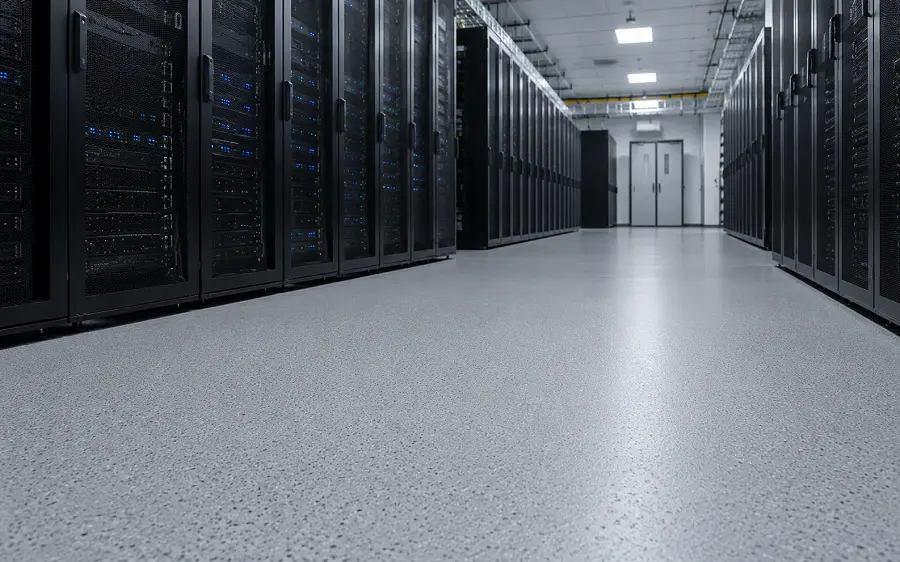
Anti-static vinyl and conductive epoxy systems engineered for static dissipation, used in data centres, electronics manufacturing, control rooms and explosive-atmosphere areas. System resistance is specified to the target range, typically static-dissipative at 10⁶ to 10⁹ ohms or conductive at 10⁴ to 10⁶ ohms, with the value matched to the equipment and standards the room operates under, including IEC 61340 where the project requires it. For full commercial anti-static and ESD vinyl specification, see our commercial vinyl and LVT flooring page.
Heavy-Duty Rubber for Industrial Zones
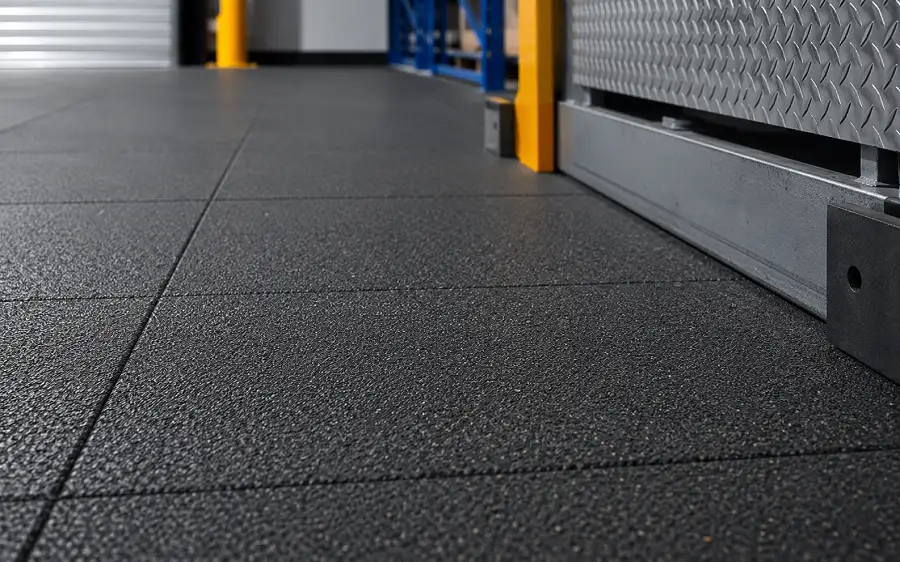
High-density rubber for impact zones, equipment-drop areas, loading bays and battery rooms. Protects the subfloor under dropped loads and absorbs impact noise where forklifts, tools or batteries hit the surface daily. Often zoned alongside epoxy elsewhere in the same warehouse, so each area carries the system it actually needs.
For industrial fit-out coordination including substrate preparation, RAMS submission, programme integration with mechanical and electrical trades, and live-operating-site phased install, see our commercial fit-out trade partner page.
Industrial Flooring by Environment
Different industrial environments load the floor differently. The fastest route to the right system is to start with the space and its dominant demand, then specify the system to it. Here is the match-up by environment, with the geography in which we see each type of site across the UAE.
Warehouses & Logistics
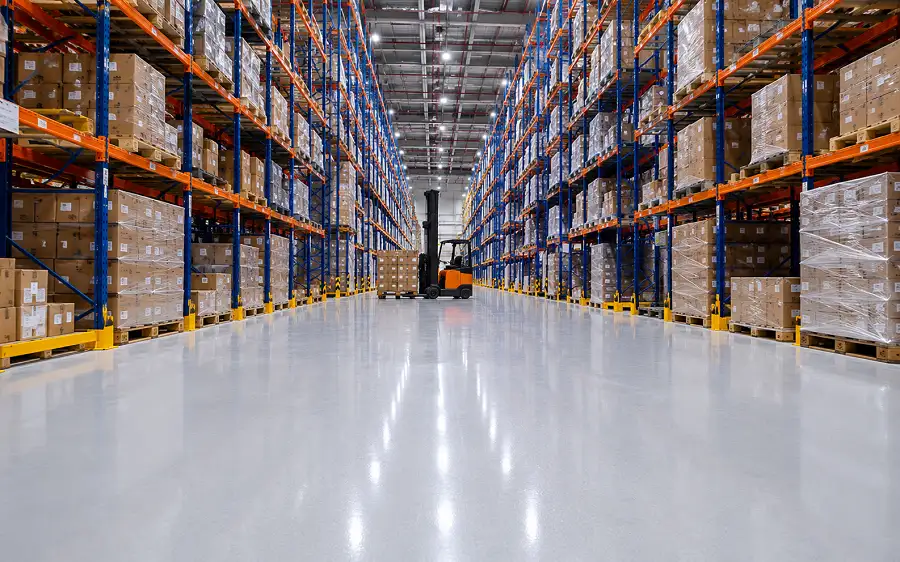
Heavy forklift traffic, pallet drag and occasional spills define warehouse and logistics floors. Standard epoxy with an abrasion-resistant topcoat handles most of the floor area, while polished concrete suits very large dry sites where lifecycle cost matters most. Dropped-load zones take rubber inserts. We work across Dubai's Jebel Ali, Dubai Industrial Park and Al Quoz, and into Abu Dhabi's Mussafah, ICAD and KIZAD clusters.
Manufacturing & Production
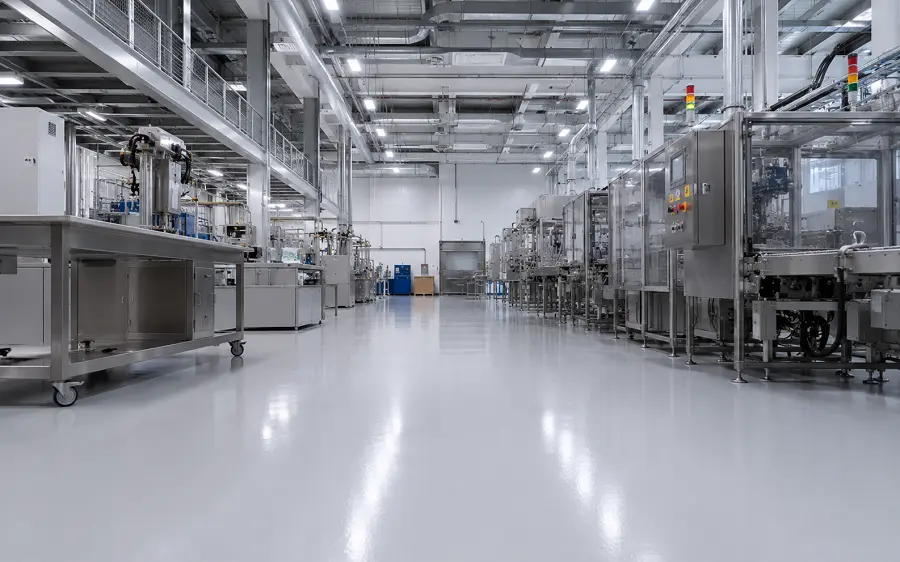
Chemical exposure, hot and cold process areas and continuous vibration shape manufacturing floors. Self-levelling epoxy delivers a clean process surface where chemistry is moderate; PU concrete takes over in food, chemical or thermal zones where epoxy fails. Zoning across the same plant is the norm rather than the exception.
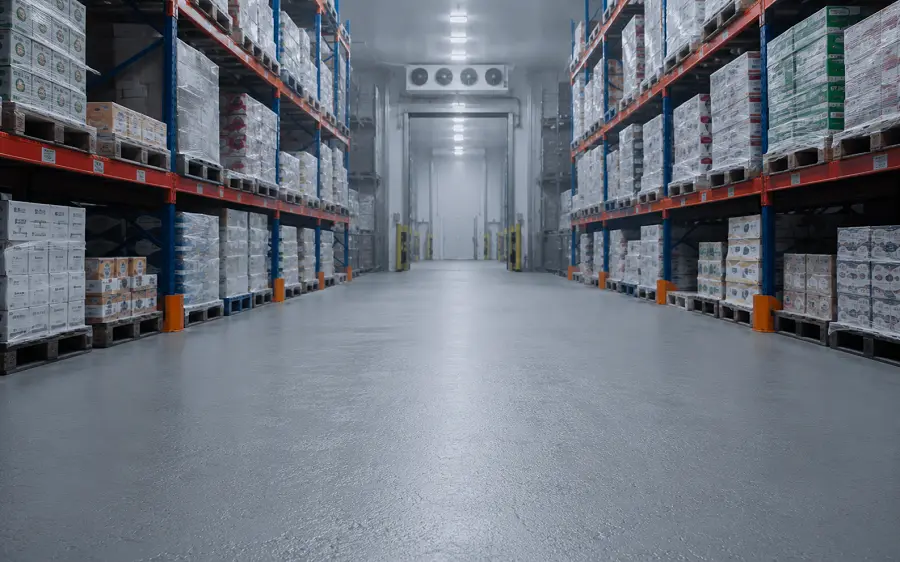
Cold Storage & Food/F&B Production
Thermal shock and hygiene control define cold storage and food production. PU concrete is the specified system in these environments, because standard epoxy fails under the freeze-thaw cycles cold stores run, and food-safe variants meet the hygiene requirements F&B production operates under.

Data Centres & Server Rooms
Static control and raised access integration define data centre and server room floors. Anti-static vinyl or conductive epoxy carries the static dissipation the equipment demands, with raised access flooring above for the cabling and cooling void. The two systems are specified together rather than in isolation.
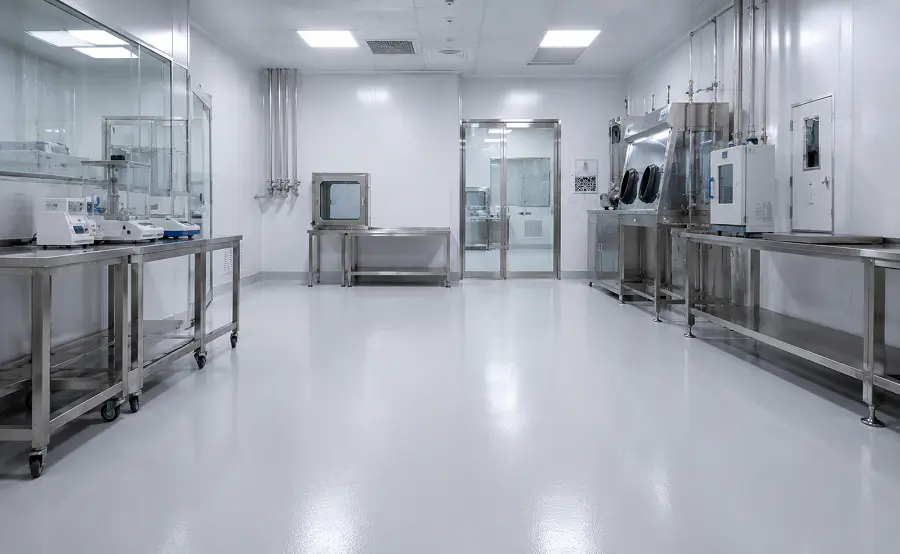
Cleanrooms & Laboratories
Particulate control, chemical resistance and slip safety shape cleanroom and laboratory floors. Seamless self-levelling epoxy or heat-welded sheet vinyl deliver the smooth, gap-free surface a controlled environment needs, with the finish specified to the cleanroom classification the room operates at.
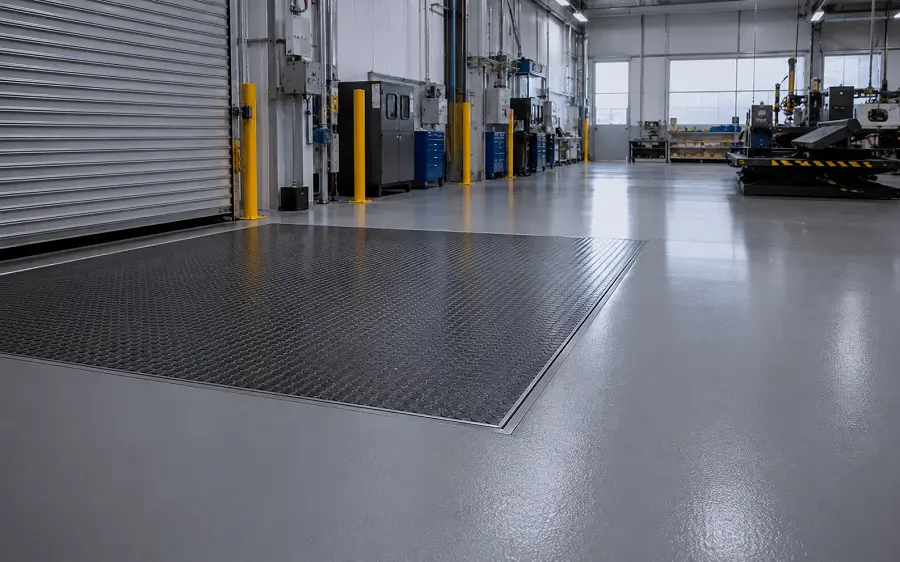
Workshops, Loading Bays & Heavy-Industry Floors
Point load, oil and fuel resistance and concentrated impact zones define workshops and loading bays. Heavy-duty epoxy screeds in 6 to 9mm thickness handle the wheel load and chemical exposure, with rubber added in dedicated drop zones. Coastal sites at Jebel Ali, Khalifa Port and coastal Mussafah carry salt-air exposure that is specified into the system selection.
Industrial Flooring Specifications That Matter
Choose by the dominant demand of the space, then specify the system to it. Industrial floors are selected against five specifications: thickness for load tolerance, chemical resistance for the process running on top, thermal range for the temperature cycle, slip rating for wet and oil exposure, and where electronics are involved, static resistance to a target range. Get those right and the floor lasts a decade; get them wrong and it fails in months.
| Specification | What it means | Industrial range |
|---|---|---|
| System thickness | Load and impact tolerance | 2mm coating to 9mm heavy-duty screed |
| Point load capacity | Forklift wheel loads on small contact areas | Standard epoxy ~5 to 20 N/mm² compressive |
| Chemical resistance | Survival against oils, acids and cleaning agents | Epoxy mild to moderate / PU high / PU concrete extreme |
| Thermal range | Freeze-thaw and hot-process tolerance | Epoxy ambient / PU concrete -40°C to 120°C cycles |
| Slip resistance (R-rating, DIN 51130) | Wet and oil-zone safety | R11 to R13 for wet and grease industrial |
| Static resistance (IEC 61340) | ESD protection | Dissipative 10⁶ to 10⁹ Ω / Conductive 10⁴ to 10⁶ Ω |
| Abrasion resistance | Pallet drag and steel wheels | Class AR ratings under EN 13892-3 |
Chemical resistance row uses comparative ranking rather than fabricated PSI figures because chemical performance is contextual, depending on which chemical, at which concentration, for which contact time. The survey specifies against your actual process chemistry rather than a generic chart.
What UAE Industrial Conditions Demand of Flooring
UAE industrial conditions add four cost and specification drivers on top of the standard demand set. Heat cycling between 45°C-plus summer ambient temperatures and air-conditioned interiors creates expansion stress that PU systems absorb better than rigid epoxy. Humidity and slab moisture demand proper vapour barriers and moisture-tolerant primers, since rushed prep is the single most common cause of early UAE industrial floor failure.
Coastal sites carry salt-air corrosion that affects substrate and finish over time; corrosion-resistant systems are specified where the location demands it. Civil Defence compliance is a regulatory requirement on most commercial industrial fit-outs, with fire classification under EN 13501-1 (Bfl-s1, Cfl-s1) and slip rating both checked rather than assumed. Subfloor preparation, including grinding, vapour testing and primer choice, is established at survey rather than assumed by reference.
Why UAE Industrial Operators Choose Commercial Flooring
Industrial projects do not reward generalist contractors. The wrong system fails fast in UAE conditions, and a failed floor stops operations until it is replaced. We specify against survey rather than against catalogue, and we install with our own team so the spec and the fit stay accountable to one supplier.
UAE Commercial Specialism Since 2013
1,500+ commercial projects delivered, with industrial work across logistics, manufacturing and specialist environments.
Specified to Survey, Not to a Default
Every project starts with a survey that establishes load, chemistry, thermal cycle and substrate, so the system matches the site rather than the brochure.
Supply and Install, Single Contractor
One team from survey to handover, so material, spec and installation accountability stay in one place.
Phased Installation for Live Operations
Out-of-hours and zoned installation keeps an operating warehouse or production line running while the floor goes in.
Authority Compliance Documented
Civil Defence fire, ESD certification where the project requires it, and slip rating documented for submission rather than asserted.
Frequently Asked Questions About Industrial and Warehouse Flooring
What is the best flooring for a warehouse?
The best flooring for a warehouse depends on the work it carries. Standard epoxy with an abrasion-resistant topcoat suits most general logistics and storage, polished concrete suits very large dry sites for lifecycle cost, and PU concrete is specified for cold storage and food production. Drop and impact zones add rubber inserts.
What flooring can take forklift traffic?
Heavy-duty epoxy screeds at 6 to 9mm thickness, PU concrete and properly polished concrete slabs all carry forklift traffic. The system is specified to wheel type, load weight and aisle layout, since point load concentrates kilos on a small contact patch. Standard thin epoxy coatings are not specified for sustained forklift use.
How thick should industrial epoxy flooring be?
Industrial epoxy thickness depends on the load. Coating systems run around 2mm for light-load and chemistry-control areas; self-levelling systems sit at 3 to 4mm for general industrial use; heavy-duty screeds reach 6 to 9mm under forklift and impact zones. The site survey matches thickness to each area rather than the whole floor.
How much does industrial flooring cost in the UAE?
Industrial flooring in the UAE starts from around AED 45 per square metre (sqm), about AED 4.20 per sqft, for polished concrete on large dry sites, rising to AED 200 per sqm and above for heavy-duty epoxy screeds and PU concrete in cold storage and food production. For the full ranges by system, see our commercial flooring cost guide.
What flooring is suitable for cold storage in the UAE?
PU concrete is the standard specified flooring for cold storage in the UAE. It tolerates freeze-thaw cycles between -40°C and 120°C without delamination, where standard epoxy fails under the same conditions. Food-safe variants meet the hygiene requirements that cold-store and F&B production operations carry, and seamless installation keeps the surface cleanable.
What is anti-static (ESD) flooring and when is it required?
Anti-static or ESD flooring dissipates static charge to protect sensitive electronics and personnel. It is specified in data centres, server rooms, electronics manufacturing, control rooms and explosive-atmosphere areas. System resistance is matched to a target range, either static-dissipative at 10⁶ to 10⁹ ohms or conductive at 10⁴ to 10⁶ ohms, depending on what the equipment and standards demand.
How long does industrial flooring last?
Industrial flooring lifespan runs 10 to 30 years depending on the system, the load and the maintenance. PU concrete and heavy-duty epoxy screeds reach the upper end under normal commercial use; standard epoxy coatings sit lower if exposed to heavy traffic; polished concrete on a sound slab can exceed 20 years. Correct specification and installation drive lifespan more than material grade alone.
Do you supply and install across Dubai, Abu Dhabi and the wider UAE?
Yes. We supply and install industrial and warehouse flooring across Dubai, Abu Dhabi and all seven emirates, including reference industrial areas at Jebel Ali, Dubai Industrial Park, Al Quoz, Mussafah, ICAD and KIZAD. One team handles survey, specification, supply and installation, with phased work where the site needs to keep operating.
Start Your Industrial or Warehouse Flooring Project
An industrial floor performs when the system is matched to the load, the chemistry and the temperature cycle it actually sees. We survey free of charge, specify against your operation rather than a default, then supply and install under one contractor, with phased work where the site needs to keep running. Operating from Al Quoz, Dubai's flooring and wholesale hub, we cover Dubai, Abu Dhabi and the wider UAE. Book a site survey and we will specify and quote your project properly.
Or call +971 50 362 7192